Finding the right opportunity
not just the right interface
Designing a Shared Language for Progress
2026
Aligning research, pedagogy, and product strategy to make learning progress visible across three international markets.
I turned fragmented insight across users, research, pedagogy, product, and commercial teams into a shared vision of what visible progress should mean.
Product Snapshot
Scale
4 international education markets across Europe and Latin America
Aligned research across multiple countries and educational systems
Connected product, pedagogy, research and commercial teams
Complexity
Synthesised fragmented evidence into a shared product direction
Balanced different teaching practices, cultures and stakeholder priorities
Facilitated cross-functional workshops to build organisational alignment
Impact
Validated a credible route to market through evidence-led experiments
Created shared understanding across previously disconnected teams
Reduced uncertainty before product investment
Context
One of the world's largest education publishers asked a deceptively difficult question:
How do you make a child's learning progress visible?
The answer needed to work for teachers, parents, school leaders, and children themselves across Spain, Italy, Mexico, and Brazil, each with different curricula, classroom cultures, levels of digital maturity and accessibility.
I was brought in to connect external research, internal expertise, and product strategy into something the organisation could act on.
The Problem
The challenge sat between several competing needs. Teachers needed visibility without additional admin burden. Parents and school leaders wanted meaningful progress signals rather than more data. Children needed progress to feel motivating rather than evaluative.
And because the product needed to work internationally, assumptions from one education system couldn't simply be exported into another. There were different markets, curricula, pathways, and definitions of progress.
The work wasn't simply about improving progress tracking. It was about validating a proposition that could work across four very different education markets before significant product investment.
My Role
Creating a shared understanding
Previous research existed, but it needed to be unearthed and synthesised to make it actionable.
Closing evidence gaps
I designed and ran new teacher interviews to test emerging hypotheses and an experiment around what visible progress meant in real classrooms and real teaching workflows.
Aligning the organisation
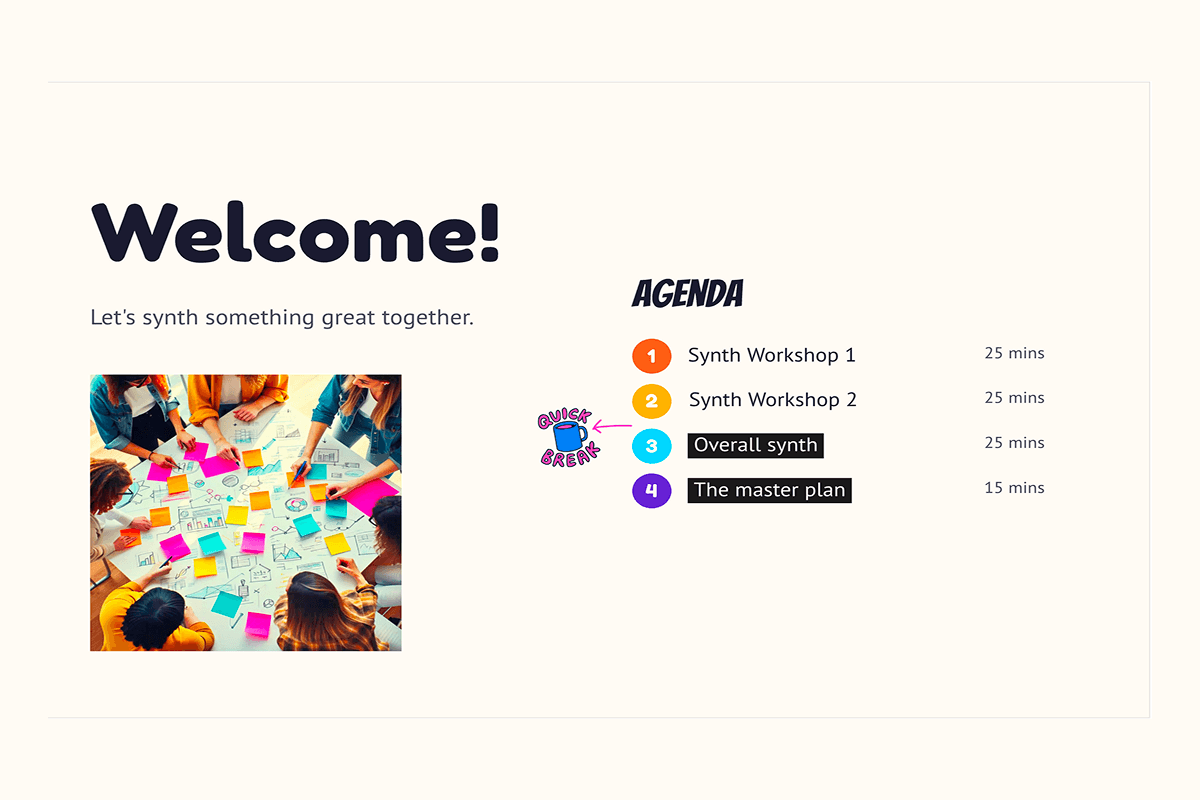
I facilitated workshops that brought together pedagogical, commercial, technical, and market expertise, surfacing knowledge that rarely met in the same conversation. Then helping the team to translate this knowledge into decisions the team could move forward with.
The Real Challenge
The hardest product challenges aren't always technical. They're often about aligning people around a shared understanding of the problem. When research, pedagogy, commercial priorities, and product strategy point in different directions, meaningful progress depends on building confidence before building software.
In organisations of this scale, the biggest threat to a good idea isn't poor UI. It's fragmentation. Research can become disconnected from product decisions, and local nuance can get flattened into global assumptions.
My role wasn't simply to design an interface. It was to create the shared understanding that would allow the right fix to emerge.
Key Decision
Align the organisation before designing the product.
Instead of moving quickly into concepts, I invested time bringing together research, pedagogy, commercial and product teams to build a shared understanding of the problem. Alignment became the foundation for every design decision that followed.
Trade-off
Prioritise shared understanding over early interface design.
Early Traction
Created a shared evidence base across research, product, pedagogy, and commercial teams.
Identified and prioritised the most credible routes to further experimentation.
Reframed future work around validated hypotheses.
Established the foundation for the next phase of concept development and testing.
What this reinforced
This project reinforced that design leadership often starts long before interfaces appear.
For problems shaped by international nuance and organisational complexity, the most valuable thing to design first isn't the product. It's building an evidence base and a shared understanding.
My Role
Building momentum
Across departments
Unearthing the problem
Building evidence for validation


